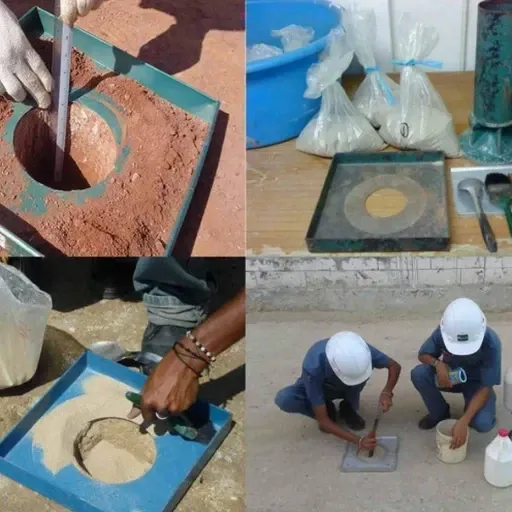
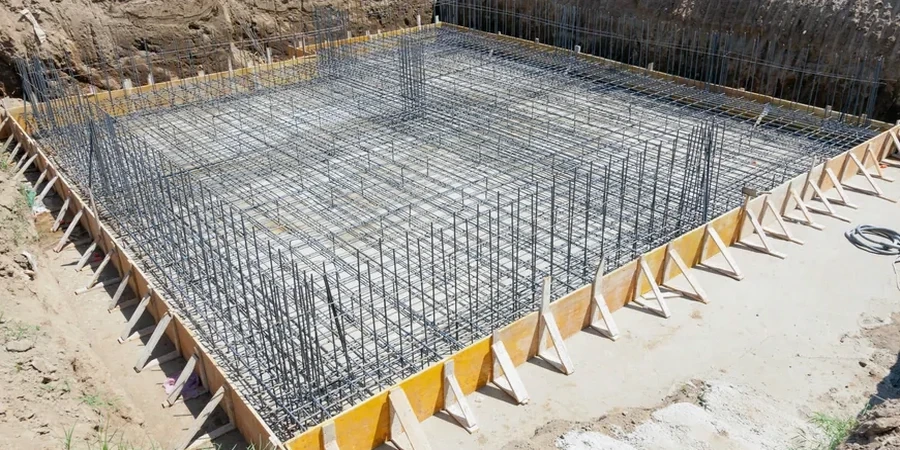
The clay basins of North Texas don’t compromise, and neither do our foundation designs. Garland sits squarely on the Eagle Ford Shale formation, where moisture-sensitive clays can swell over 6 inches during seasonal cycles—enough to crack a conventional footing in a single summer. With an average annual rainfall of 40 inches concentrated in spring and fall, the soil beneath a Garland slab cycles between saturation and desiccation multiple times per year. Our raft/mat foundation design accounts for this volumetric instability by distributing structural loads across a continuous reinforced slab, reducing differential settlement to fractions of an inch. Before we finalize any mat geometry, we correlate soil stiffness from CPT testing with laboratory consolidation curves, ensuring the raft thickness and reinforcement are tuned to the actual stratigraphy beneath the Garland site rather than generic code minimums.
A mat foundation in Garland isn't oversized concrete—it's a calibrated structural diaphragm designed to ride seasonal clay movement without transmitting distortion to the superstructure.