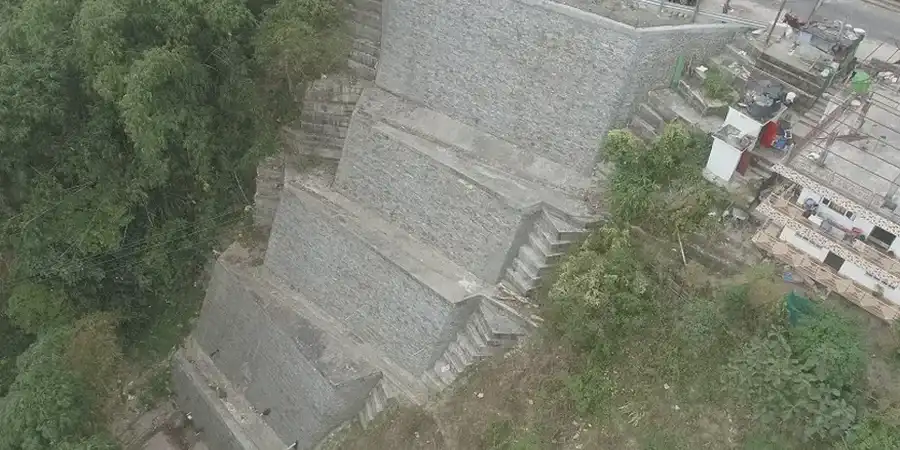
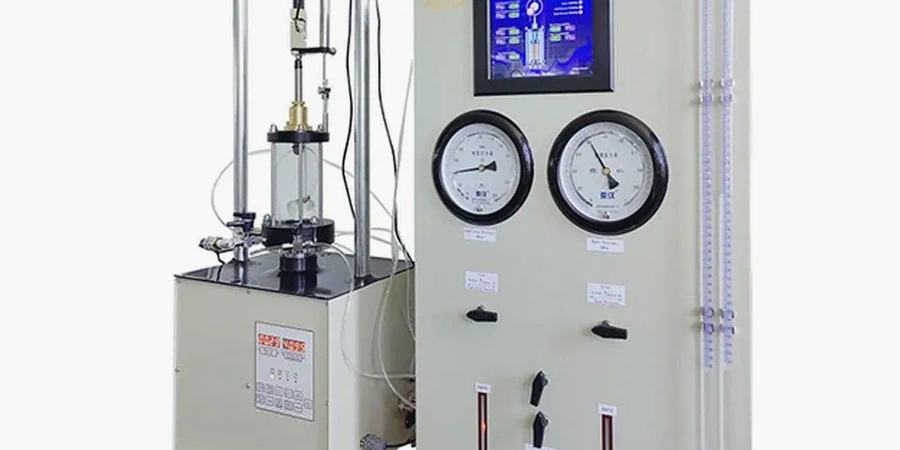
Specifying foundation parameters based on unconfined compressive strength alone is a common miscalculation on the heavy clay soils found throughout Garland. The problem becomes evident when a warehouse slab cracks diagonally six months after construction, or a retaining wall begins to rotate after a wet winter. The expansive, overconsolidated clays of the Eagle Ford formation respond dramatically to changes in moisture content, and only a triaxial test can isolate the effective stress parameters that govern long-term stability. Our laboratory runs consolidated-undrained triaxial tests with pore pressure measurement on specimens trimmed from undisturbed Shelby tube samples taken across Dallas County. Before the lab work begins, many project engineers combine field investigation with spt drilling to establish a preliminary stratigraphic profile, which guides sampling depth and specimen selection for advanced strength testing.
A drained triaxial test on a saturated Garland clay specimen reveals the friction angle that governs long-term slope stability, not just the undrained cohesion that controls short-term excavation behavior.