GEOTECHNICAL ENGINEERING
GARLAND
HomeIn-Situ TestingField density test (sand cone method)

Field Density Test (Sand Cone Method) – Garland, TX

Evidence-based design. Reliable delivery.

LEARN MORE

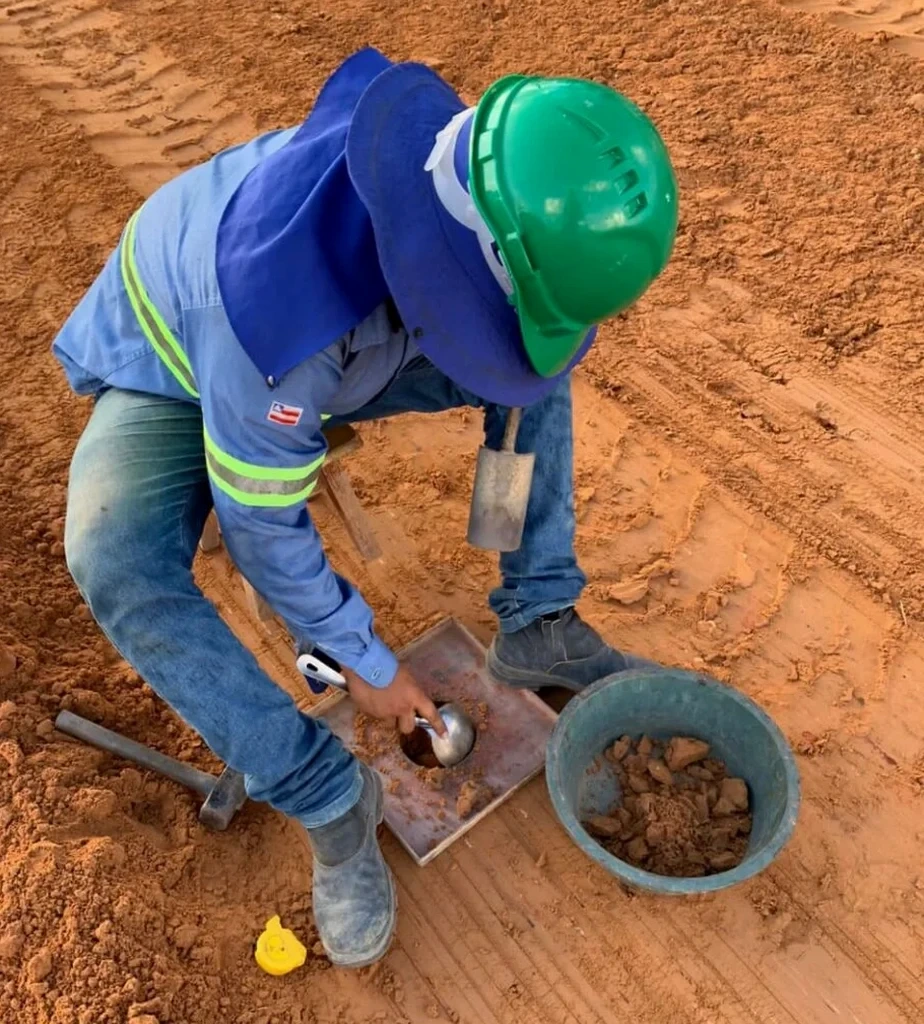
A common oversight in Garland earthwork projects is assuming the proctor curve from the lab automatically translates to the pad. The clay-rich soils across Dallas County, particularly where the Eagle Ford Shale weathers into expansive fat clays, can fool even experienced operators. A sheepsfoot roller might feel solid on the surface, yet a sand cone density test six inches down reveals 88% compaction where 95% is required under IBC Chapter 18. We see this most often in subdivisions east of Lake Ray Hubbard, where residential slabs start showing distress within two years because the fill wasn't verified layer by layer. The sand cone method remains the most practical and defensible field check for cohesive soils in North Texas, giving you a direct measurement of in-place dry density against the laboratory standard before the concrete goes in.

Compaction is the cheapest insurance policy in North Texas geotechnics—every 1% below spec in fill can double the risk of differential settlement on expansive clay.
Our service areas

Methodology and scope

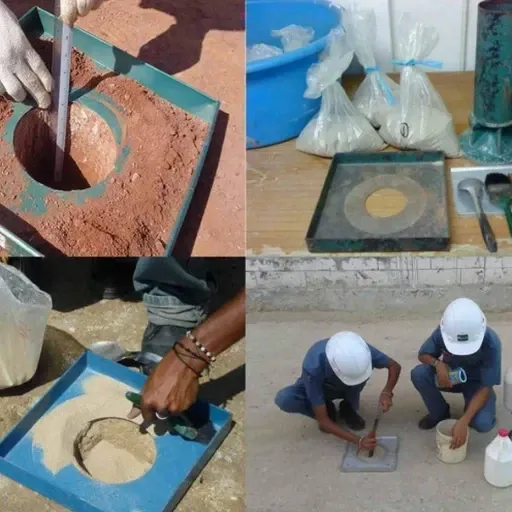
Garland sits on a geological transition zone. Moving west toward Dallas you encounter the Austin Chalk formation, while the eastern sections toward Rowlett sit on the Eagle Ford Group, a marine shale that weathers into highly plastic, moisture-sensitive clay. That duality means compaction acceptance criteria can shift within a single project site. The sand cone test, run per ASTM D1556, lets us measure field density in the top 6 to 8 inches of each lift directly, without the calibration delays of nuclear gauges that struggle in iron-rich residual soils. We pair this data with laboratory proctor curves—ASTM D698 for standard effort or ASTM D1557 for modified—to calculate relative compaction percentages. For fill areas where the native clay has been cut and recompacted, reaching 95% modified proctor is the typical Garland building official expectation, and our reports present the wet density, dry density, moisture content, and percent compaction in a tabulated format that the inspector can verify in under a minute. For deeper stratigraphic context when the fill exceeds four feet or when undocumented fill is suspected, we often recommend supplementing the density testing with an SPT drilling program to log blow counts and confirm the bearing stratum before foundation design is finalized.
Field Density Test (Sand Cone Method) – Garland, TX
Technical reference — Garland

Local considerations

In Garland, we've observed that the biggest compaction risk isn't the test itself—it's the timing. Fat clays in the Eagle Ford formation can hold moisture for weeks after a rain event, and placing fill when the soil is 3% to 5% above optimum moisture creates a false sense of density. The proctor hammer compacts a sample in a steel mold; a sheepsfoot on a wet lift just remolds the clay without expelling air. The sand cone test catches this because the lab moisture content comes back showing elevated values, and the dry density drops below the curve. Another local problem is using the wrong proctor reference: a contractor who runs a standard proctor (12,400 ft-lbf/ft³) but compacts to modified effort (56,000 ft-lbf/ft³) will report inflated relative compaction numbers that don't hold up under structural loads. The IBC and the City of Garland's adopted amendments require field verification that matches the design assumption, and our technicians flag these discrepancies before the next lift is placed, saving rework that can cost more than the entire testing budget.

Need a geotechnical assessment?

Reply within 24h.

Email: [email protected]

Explanatory video

Reference standards

ASTM D1556 – Standard Test Method for Density and Unit Weight of Soil in Place by Sand-Cone Method, ASTM D698 – Standard Test Methods for Laboratory Compaction Characteristics of Soil Using Standard Effort, ASTM D1557 – Standard Test Methods for Laboratory Compaction Characteristics of Soil Using Modified Effort, ASTM D2487 – Standard Practice for Classification of Soils for Engineering Purposes (Unified Soil Classification System), IBC Chapter 18 – Soils and Foundations (adopted by City of Garland)

Technical data

ParameterTypical value
Test standardASTM D1556 / AASHTO T 191
Measured propertyIn-place dry density (pcf or kg/m³)
Test depth rangeUp to 8 inches per test location
Soil types suitableCohesive and granular soils with max particle size < 1.5 in
Acceptance referencePercent of ASTM D698 / D1557 lab maximum dry density
Sampling containerCalibrated sand cone apparatus with Ottawa sand
Reporting metricWet density, dry density, moisture content, % compaction

Frequently asked questions

How many sand cone tests does the City of Garland require per lift?

The City of Garland typically follows IBC and the project-specific geotechnical report recommendations. As a rule of thumb, one test per 2,500 square feet per lift is common for building pads, and one test per 150 linear feet for utility trench backfill. The final frequency is set by the geotechnical engineer of record based on fill thickness and consequence of failure, and our field technicians can adjust density during placement to match the approved testing plan.

What is the typical cost range for a sand cone density test in Garland, TX?

For Garland projects, budget between US$100 and US$170 per individual test location when part of a scheduled earthwork testing program. The unit rate depends on the number of tests per mobilization and the travel distance from our local field crew. A full-day compaction monitoring package with multiple tests per lift is the most cost-effective approach for residential plats and commercial pads.

Can the sand cone test be used on crushed limestone base course?

Yes, but with limitations. ASTM D1556 is suitable for soils with maximum particle size under 1.5 inches. For TxDOT flexible base (Grade 1 or Grade 2 limestone), the sand cone works well if the technician carefully excavates the test hole to avoid disturbing large aggregate at the edges. For larger rock or open-graded base, a water replacement method or nuclear gauge with proper calibration is more appropriate, and we can advise which method fits your Garland site material.

How long does it take to get the test results on site?

The in-field portion of the sand cone test takes about 15 to 20 minutes per location. The technician can give you a preliminary wet density number immediately. The final dry density and percent compaction require oven-drying the excavated soil sample, which typically takes 24 hours in our Dallas-area lab. If you need same-day results for tight earthwork schedules, we can run a microwave moisture determination on site and provide a final report by end of day.

Location and service area

We serve projects in Garland and surrounding areas.

View larger map