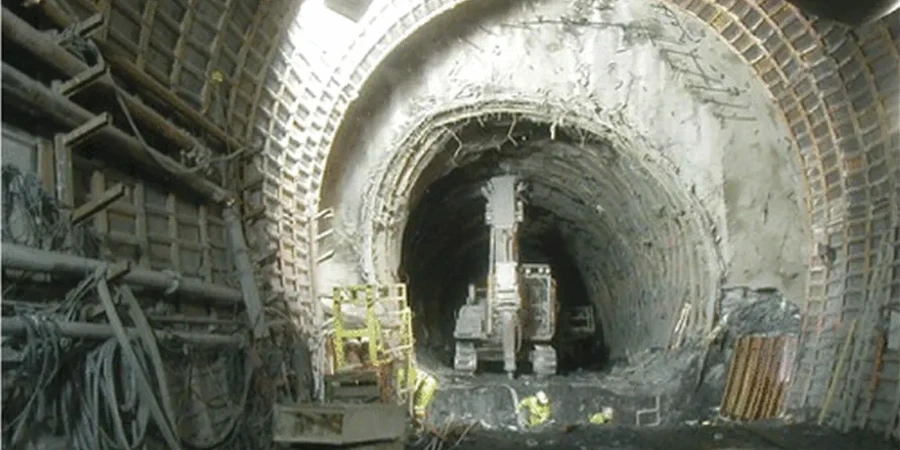
Driving a tunnel through the blackland prairie clays of Garland isn't a routine job. The city sits squarely on the Eagle Ford Shale formation, but what gets contractors into trouble are the weathered, near-surface deposits that turn slick with moisture. Our team has seen too many estimates go sideways when the lab data doesn't capture how these clays behave under sustained load. A standard boring won't tell you enough about the undrained shear strength needed for tunnel face stability. We run consolidated-undrained triaxial tests with pore pressure measurement to nail down effective stress parameters before the TBM ever touches dirt. Anything less is gambling with a $12 million microtunnel spread. The lab protocol we follow matches ASTM D4767 for staged shearing, because squeezing ground in Garland doesn't follow textbook curves—it yields progressively, and the design envelope has to reflect that.
Predicting tunnel face stability in Garland starts with knowing your plasticity index shift across the alignment—ignore it, and settlement shows up at the curb line.